
Last updated September 23, 2026
Free visual inspection and a written scope of work before any mitigation begins - photos, moisture readings, and drying logs go in your claim file
The scope we write is the scope we bill. Anything new gets shown to you, in writing, before we touch it.
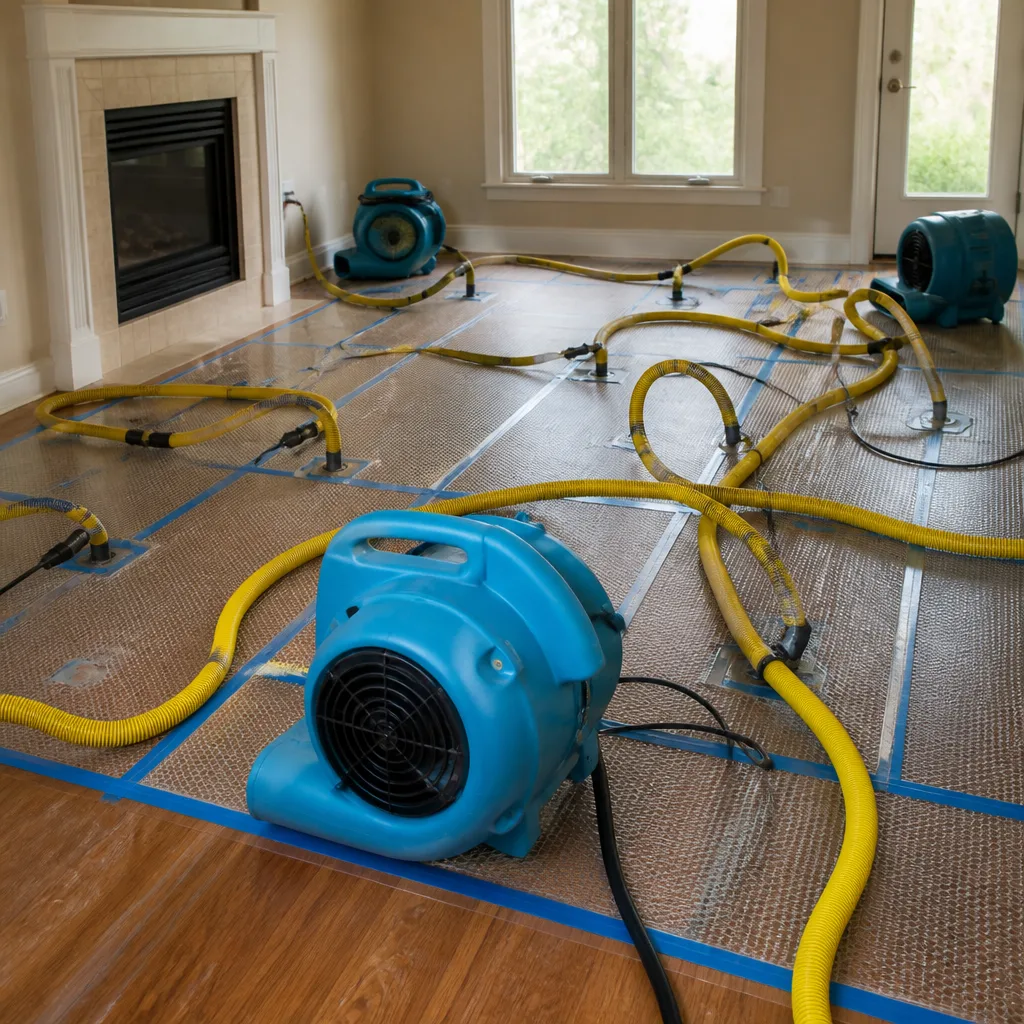
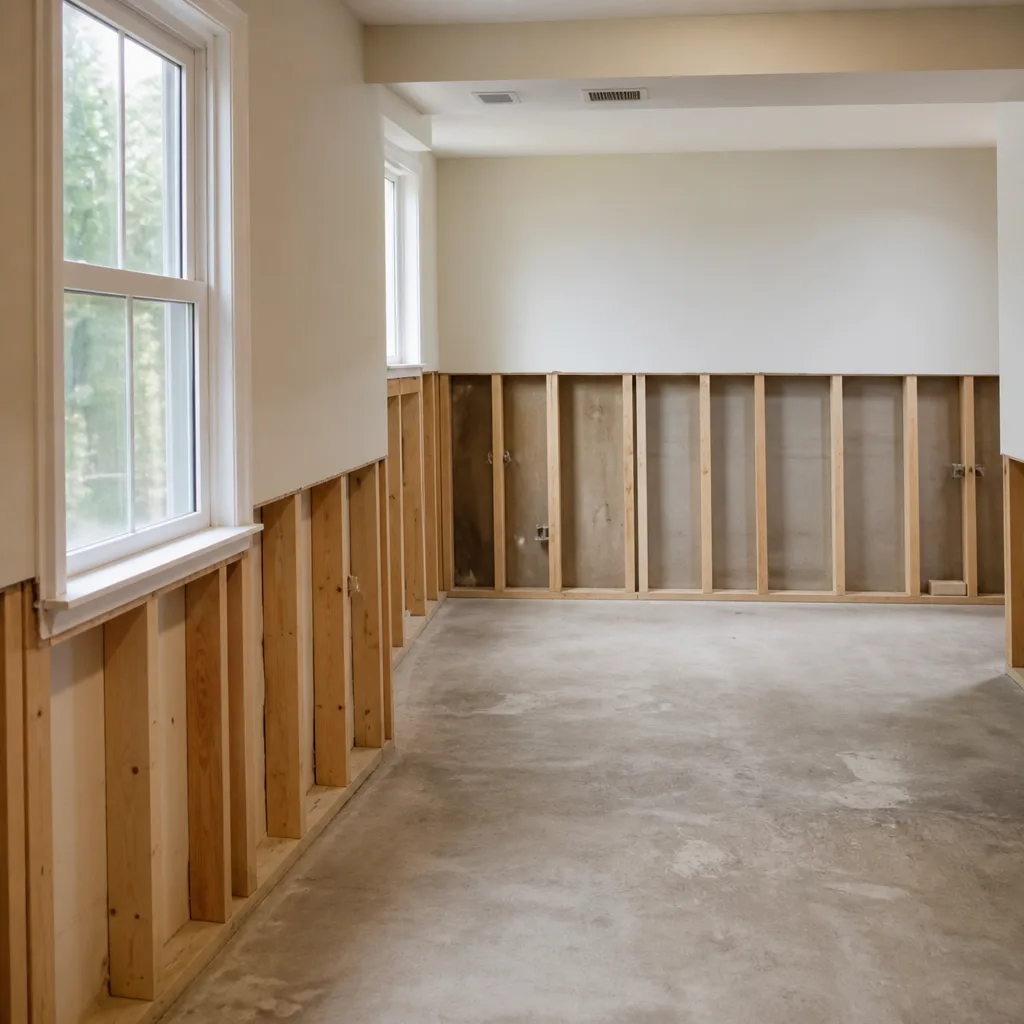
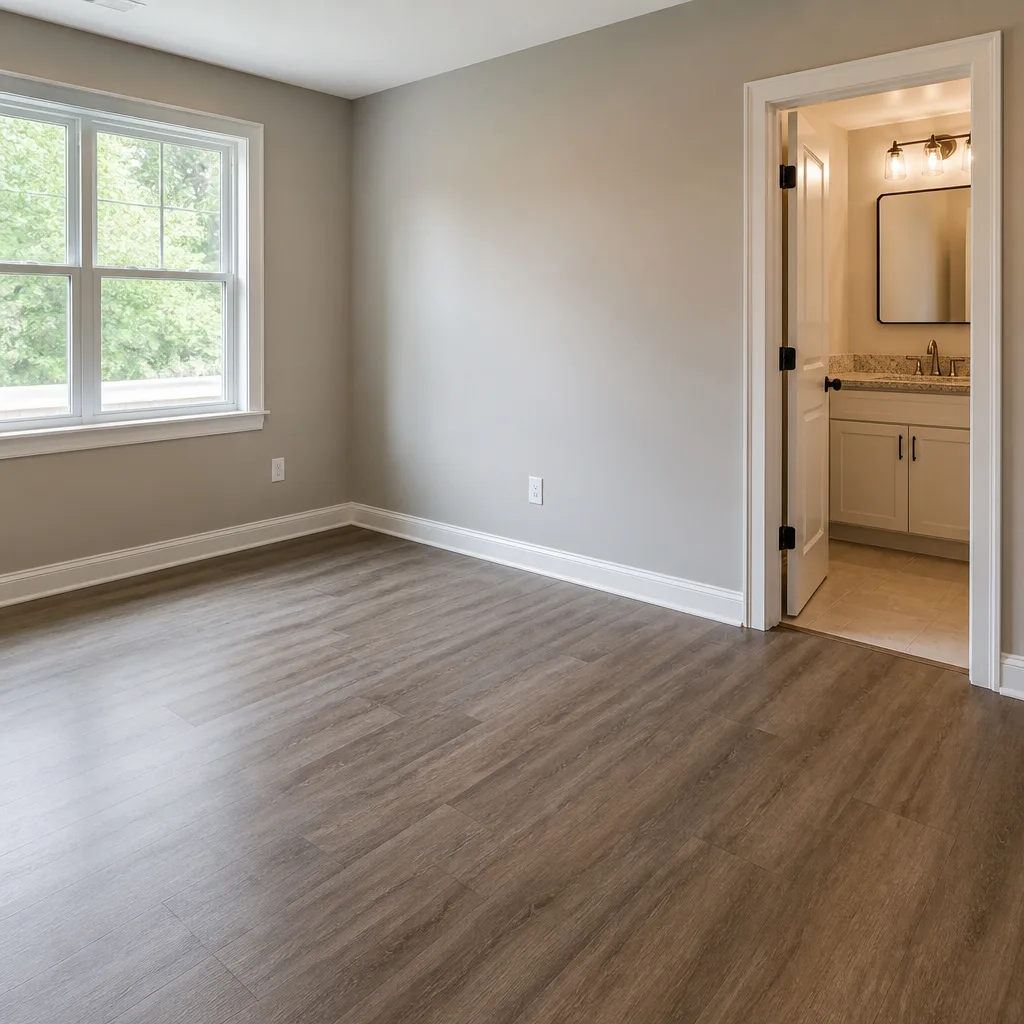
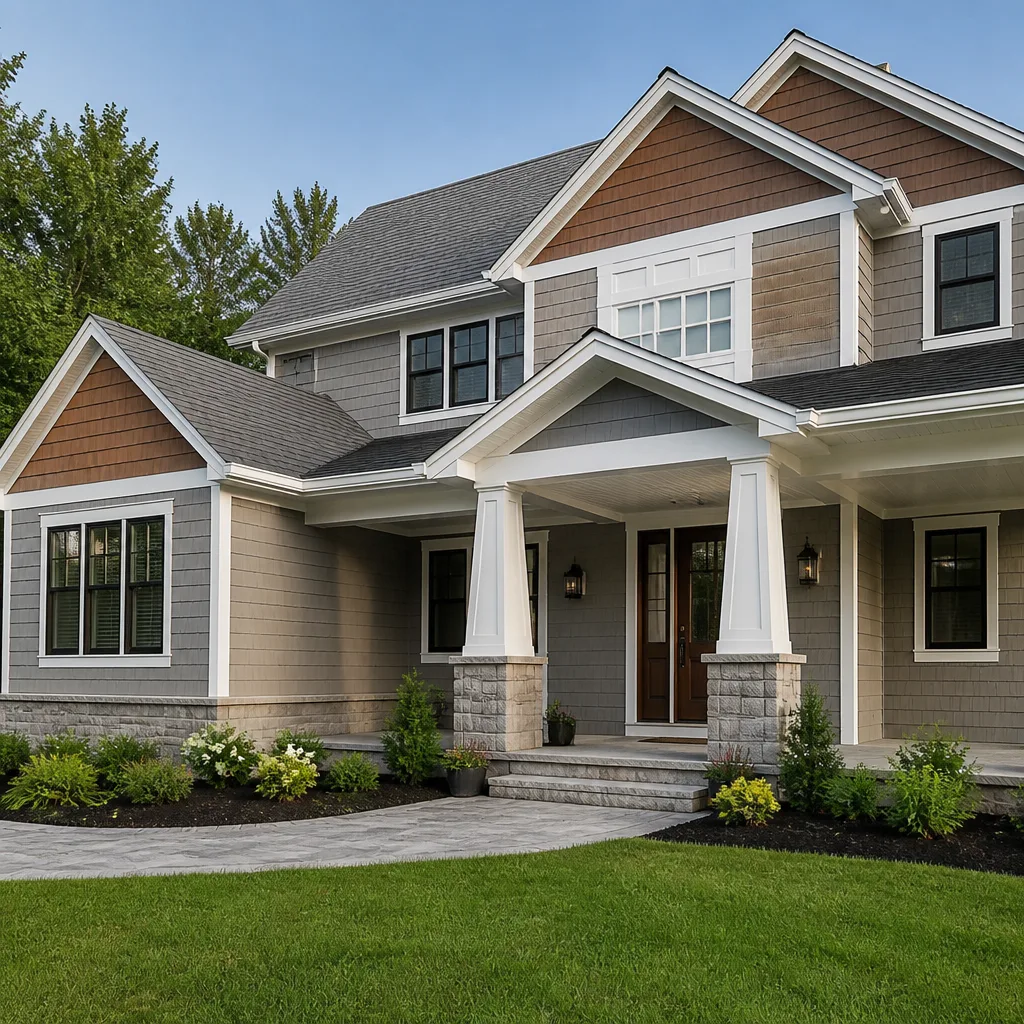
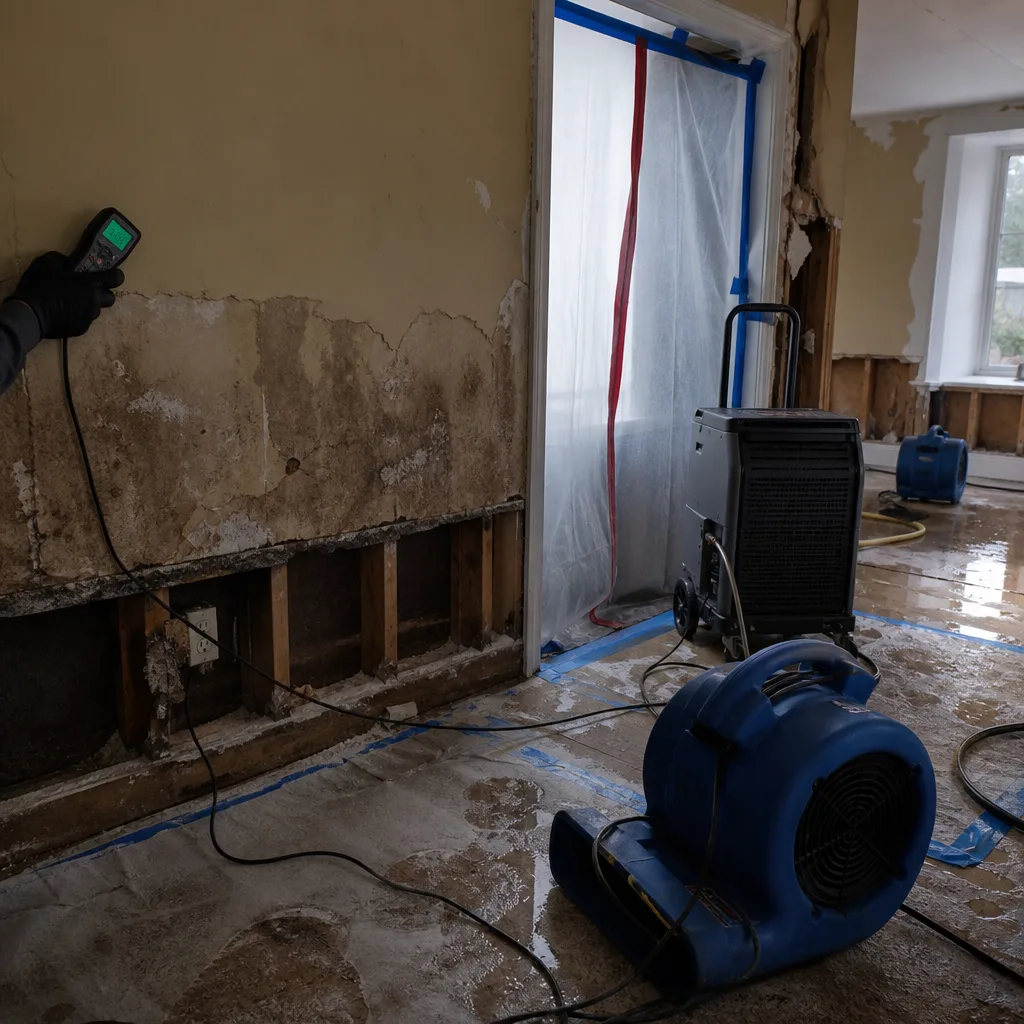 Before
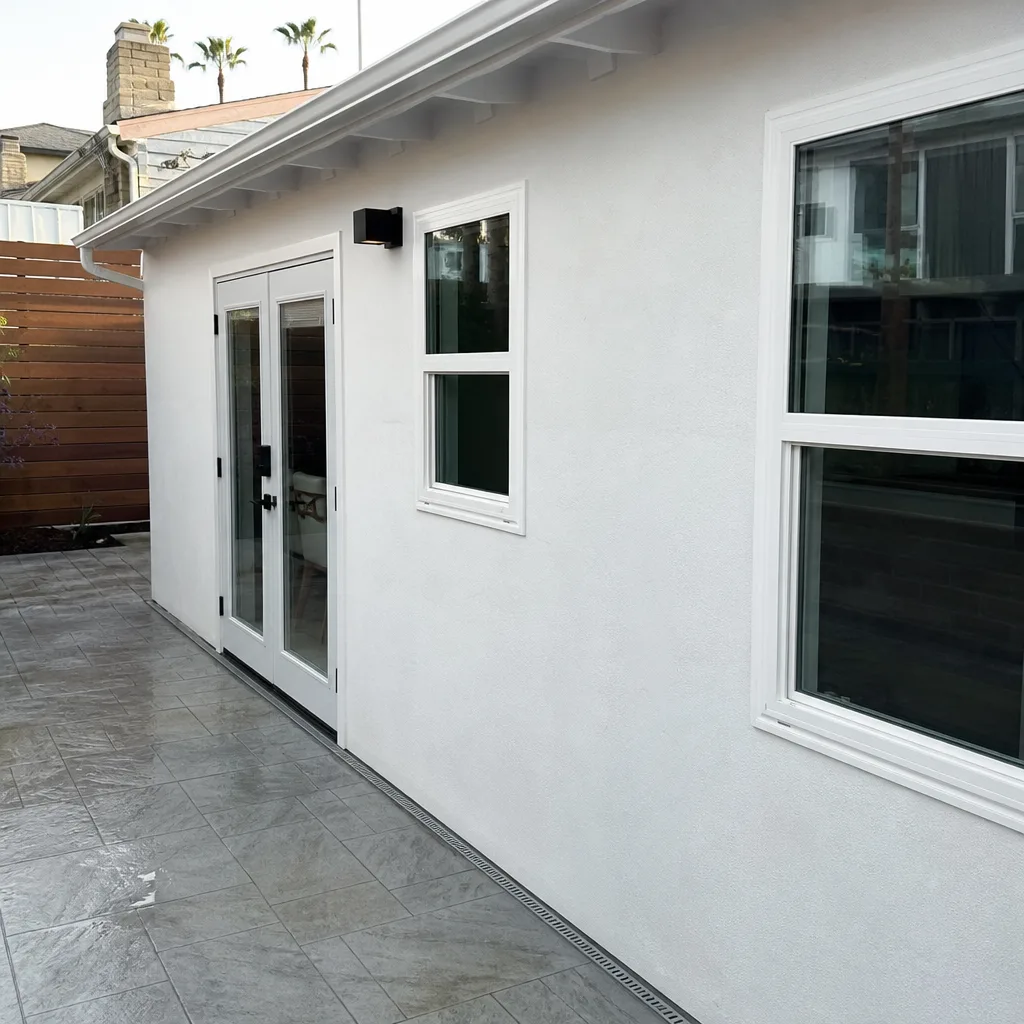 After
After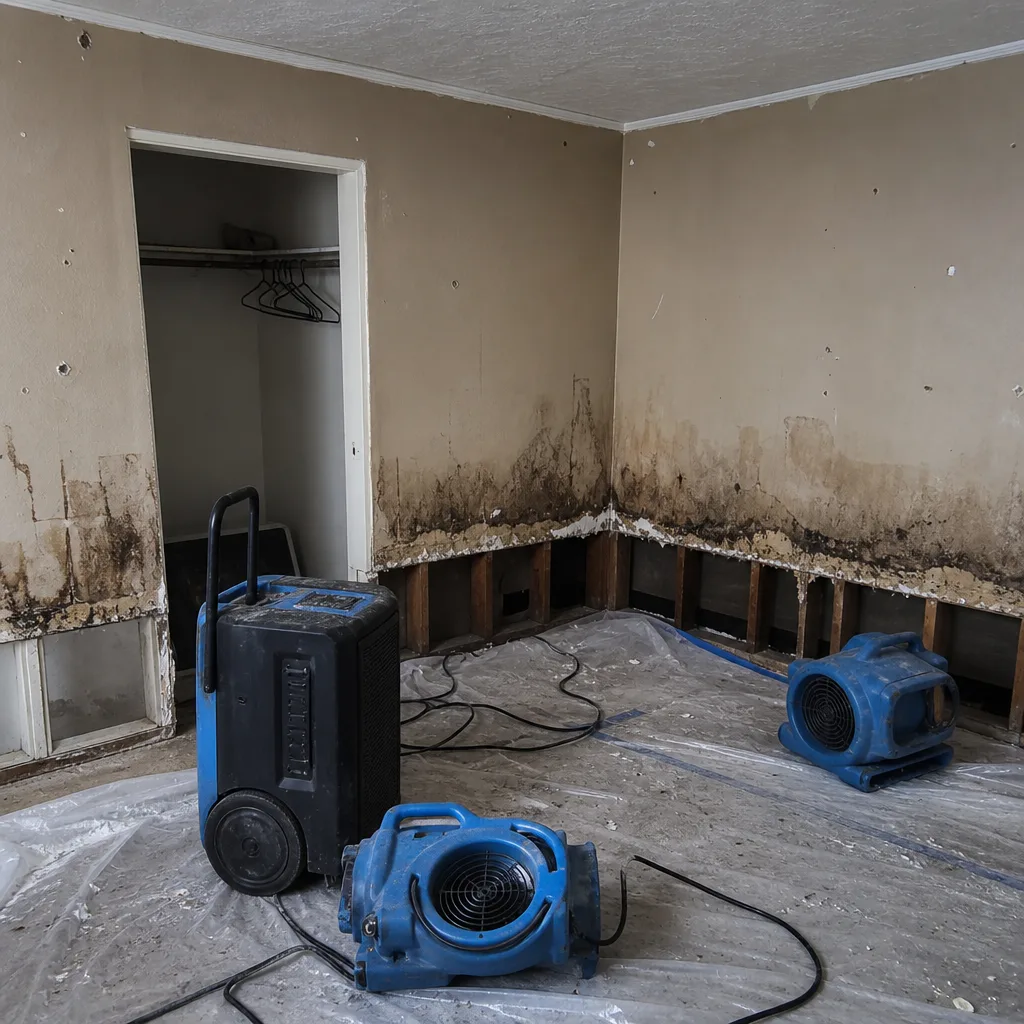 Before
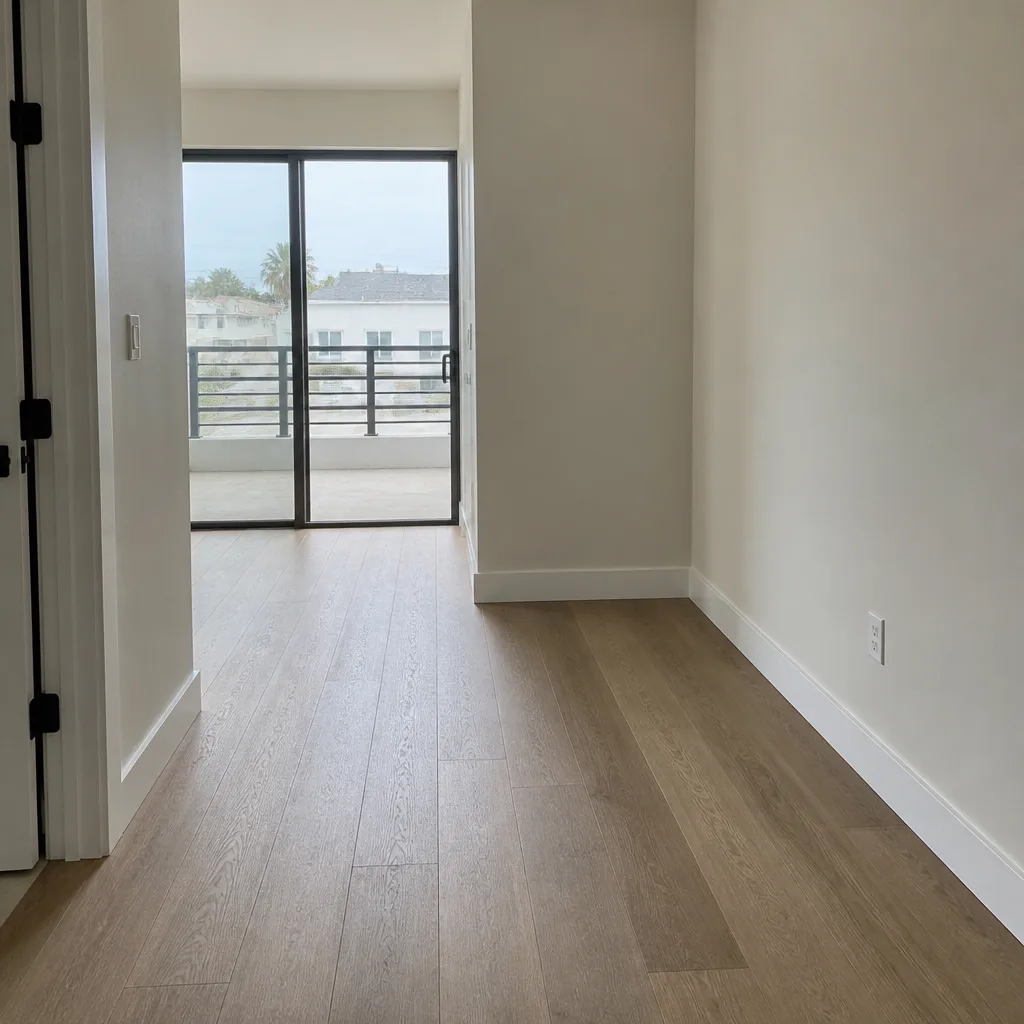 After
After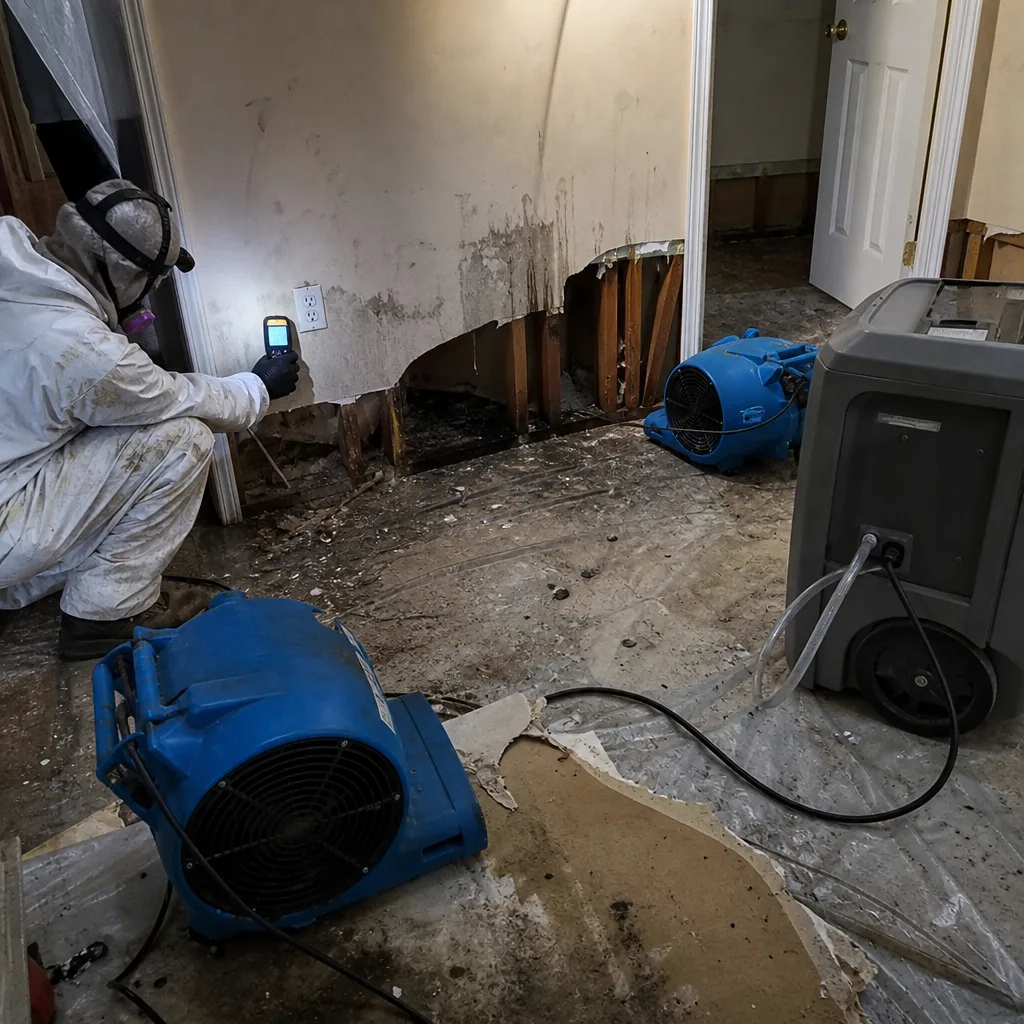 Before
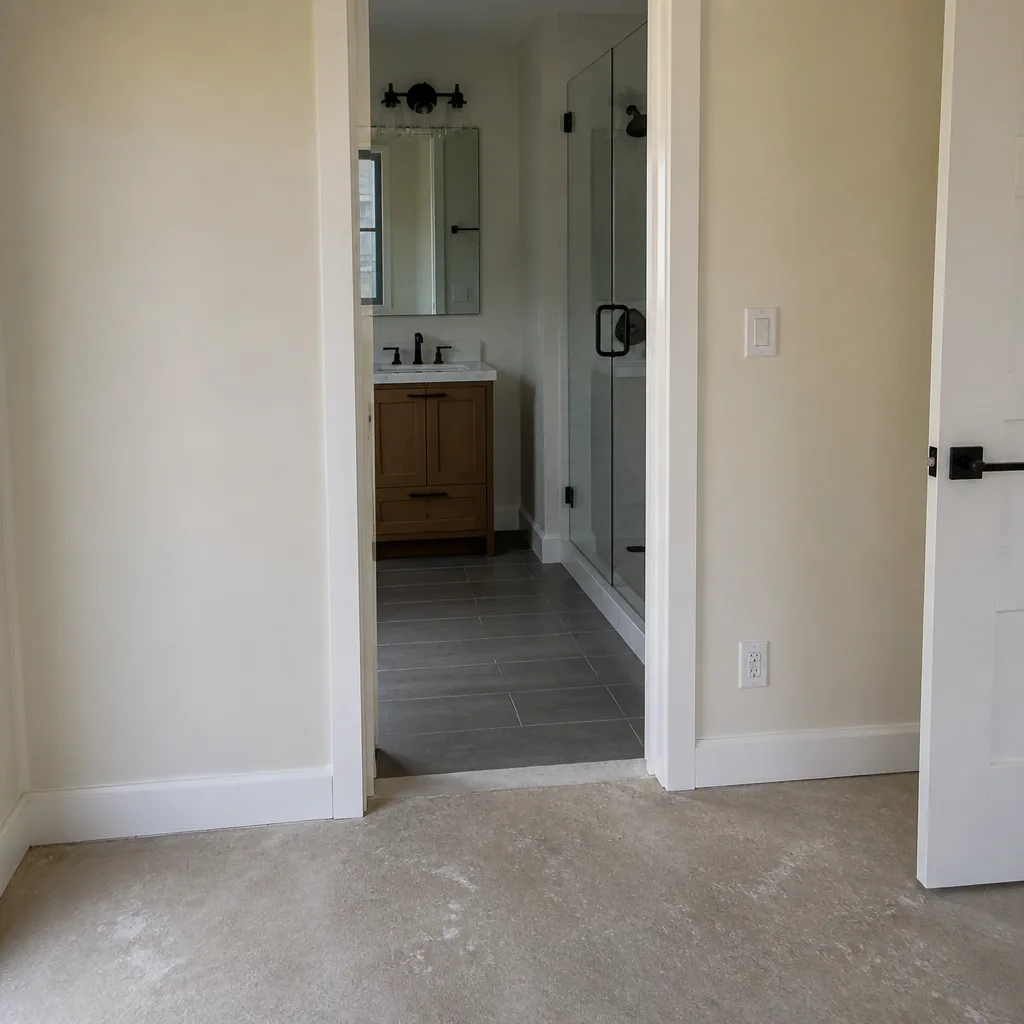 After
AfterDamage Restoration Cost Breakdown: The Playa del Rey Homeowner’s Reference for 2026
The single most inflated line item in a California residential restoration invoice is not the demolition or the drying equipment. It is the administrative and project management fee, which legitimate contractors price at 10-15% of direct costs and which some firms invoice at 30% or more with no itemized justification. In Playa del Rey, where coastal humidity slows drying cycles and older slab foundations complicate moisture tracking, homeowners who cannot read a restoration invoice often pay thousands in padded line items that never reach the equipment or labor they can see. This guide breaks down what each cost category should contain, what current market rates look like in the Playa del Rey and South Bay area, and which line items are the most common sites of inflation in contested claims. For related reading, see our Damage Restoration Warning Signs: A Playa del Rey Homeowner’s Reference Guide.
Quick Answer
Water damage restoration in Playa del Rey typically ranges from $3,500 to $8,500 for a standard residential mitigation, with full reconstruction adding $12,000 to $45,000 depending on finish level. Emergency service calls run $250-$500 after hours, equipment rental costs $35-$85 per unit per day, and legitimate project management fees should not exceed 15% of direct costs. The final invoice is controlled by the scope of work document signed before work begins, which is why Haven Standard, Clause 1 requires a written price before any crew enters the home.
Table of Contents
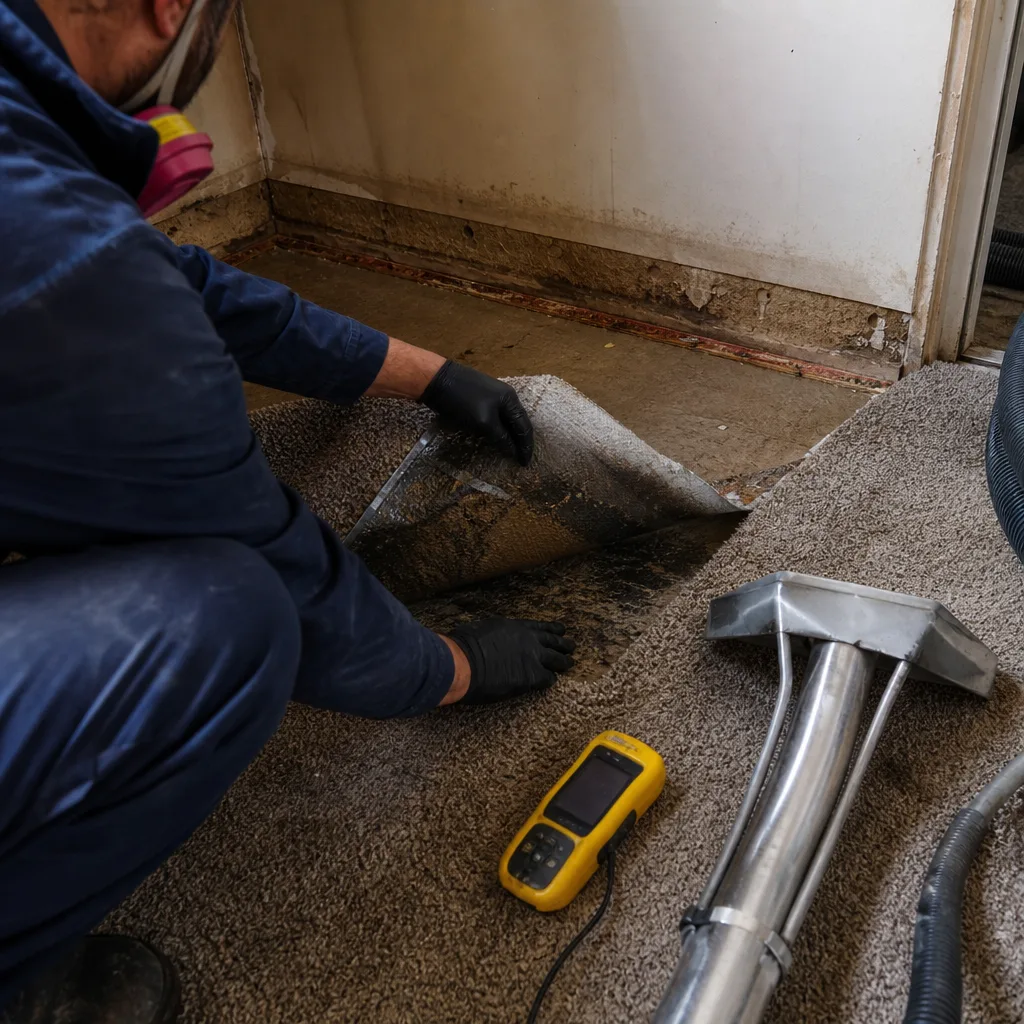
- How Restoration Invoices Are Structured: The Four Phases
- Emergency Services Pricing in the South Bay Market
- Mitigation Costs: Drying, Demolition, and Equipment
- Contents Handling: The Hidden Invoice Trap
- Rebuild and Reconstruction Costs
- How to Read Xactimate Line Items and Spot Padding
- What Insurance Covers vs. What You Pay
- Three Line Items to Demand Separately Before Signing
 Before
 After
AfterHow Restoration Invoices Are Structured: The Four Phases
Every restoration invoice, whether from a national program vendor or an independently owned and operated firm like ours, organizes costs into four phases. Understanding this structure is the first step to spotting where dollars disappear.
Phase 1: Emergency Services. This covers the initial response, moisture detection, containment, and any immediate stabilization needed to prevent further damage. In Playa del Rey, where morning marine layer can keep relative humidity above 70% even in summer, emergency response often includes deploying dehumidification immediately rather than waiting for the mitigation phase. Typical emergency service charges in Los Angeles County run $250-$500 for standard business hours and $400-$750 for after-hours dispatch, with holiday premiums reaching $900-$1,200.
Phase 2: Mitigation. This is the bulk of most invoices: water extraction, demolition of unsalvageable materials, drying equipment placement and monitoring, and antimicrobial application. Mitigation is priced by square foot for demolition ($2.50-$5.00 per square foot for drywall removal, $4.00-$8.00 for flooring) and by day for equipment rental. A typical Playa del Rey water loss in a 1,200-square-foot home runs 3-5 days for drying, with equipment counts determined by psychrometric data, which is the measurement of air temperature, relative humidity, and vapor pressure that tells us how much moisture the air can still hold.
Phase 3: Contents Handling. This includes packing, moving, cleaning, storing, and returning personal property. It is routinely buried inside mitigation or rebuild line items, making it impossible to compare across bids. We will return to this.
Phase 4: Reconstruction. Also called rebuild or restoration, this is the return to pre-loss condition: new drywall, flooring, paint, fixtures, and finish carpentry. Unlike mitigation, which responds to conditions as found, reconstruction is scoped in advance like a remodeling project and should never be started without a written price, per Haven Standard, Clause 1.
Each phase has its own pricing logic, its own documentation requirements, and its own vulnerability to inflation. The homeowner who understands the boundary between phases can challenge a bill that shifts reconstruction labor into mitigation rates, or that bills equipment rental days after the drying log shows attainment of dry standard.
Emergency Services Pricing in the South Bay Market
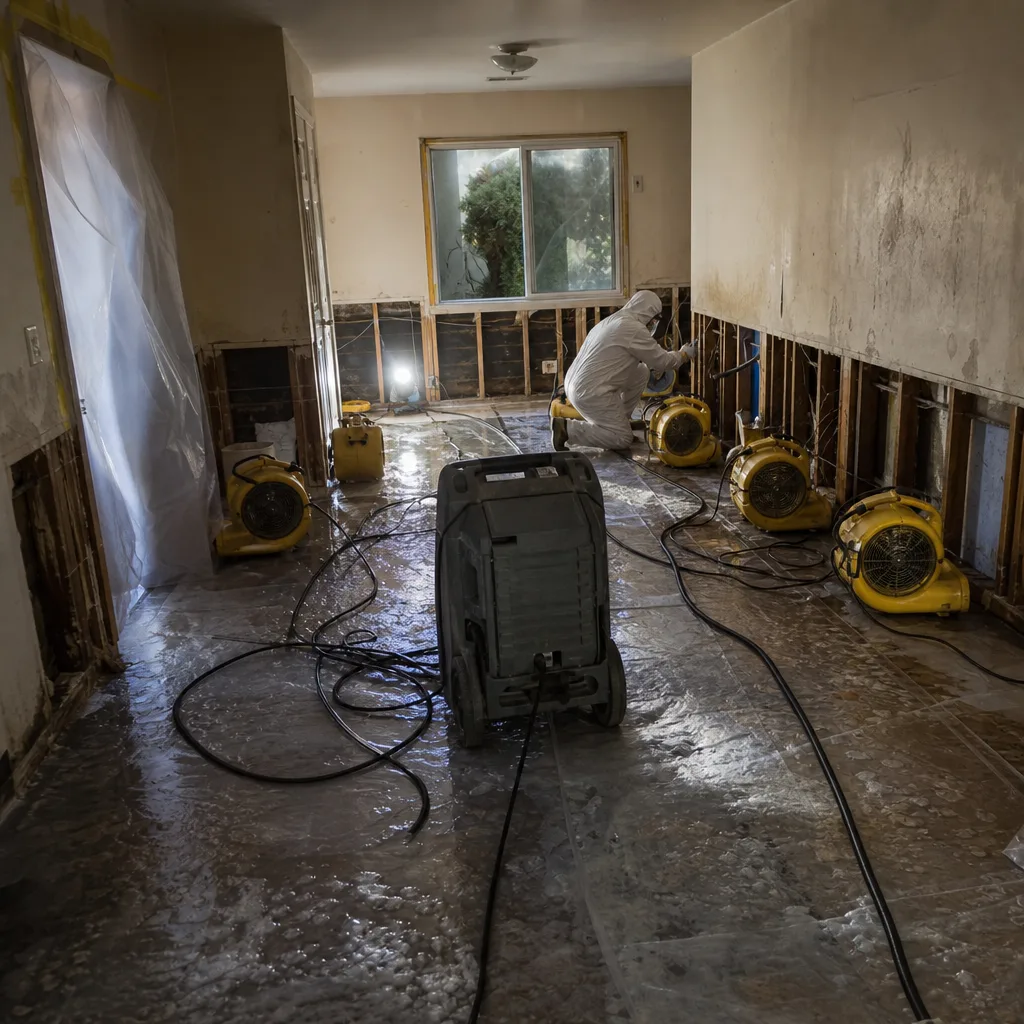
Emergency response pricing varies by time of call, crew size, and equipment needed for initial stabilization. The following ranges reflect what we see in the Playa del Rey, Marina del Rey, and Westchester markets in 2026:
| Service | Business Hours | After Hours / Weekend | Holiday |
|---|---|---|---|
| Initial response call (1-2 technicians) | $250-$400 | $400-$650 | $750-$1,200 |
| Water extraction (per hour, 2-person crew) | $175-$250 | $250-$350 | $350-$500 |
| Moisture mapping and documentation | $150-$300 | $200-$400 | $300-$500 |
| Containment setup (plastic barriers, negative air) | $200-$450 | $300-$600 | $450-$800 |
Playa del Rey’s specific geography affects these numbers. The coastal location means many homes sit on fill or alluvial soil with high water tables, so basement and crawl space flooding requires submersible pumps and specialized extraction that inland Los Angeles homes rarely need. The dense housing near Vista del Mar and the beachfront properties along the bluff also mean limited parking for equipment trucks, which can add mobilization fees of $75-$150 per visit when crews must stage equipment blocks away.
One critical detail: emergency services should always include a written scope before work proceeds beyond stabilization. Haven Standard, Clause 1 exists because we have seen too many Playa del Rey homeowners sign vague authorization forms that become open-ended commitments. The written price before work starts applies to emergency services too, even if that price is a not-to-exceed figure with a defined trigger for re-estimation.
Mitigation Costs: Drying, Demolition, and Equipment
Mitigation is where most restoration dollars are spent and where invoice literacy matters most. This phase breaks into three cost categories: demolition, drying equipment, and labor for monitoring and adjustment.
Demolition and Removal
Demolition pricing in the Los Angeles coastal market:
- Drywall removal, ceiling: $3.50-$6.00 per square foot
- Drywall removal, walls: $2.50-$4.50 per square foot
- Flooring removal, carpet and pad: $1.50-$3.00 per square foot
- Flooring removal, hardwood: $3.00-$6.00 per square foot
- Flooring removal, tile or stone: $4.00-$8.00 per square foot
- Insulation removal (batts): $1.00-$2.50 per square foot
- Insulation removal (blown): $2.00-$4.00 per square foot
These prices include disposal. What they do not always include is HEPA containment for Category 2 or 3 water losses, or the protective measures required when disturbing lead-based paint or asbestos-containing materials common in Playa del Rey homes built before 1978. Those additions can add $500-$2,000 to the demolition phase and should appear as separate line items, not as percentage markups.
Drying Equipment: Daily Rates and Appropriate Counts
Equipment rental is the engine of mitigation profitability, and it is the most commonly padded category. Here are the standard daily rates we see in the South Bay:
| Equipment Type | Class/Size | Typical Daily Rate | Appropriate Duration |
|---|---|---|---|
| Refrigerant dehumidifier | Standard (70-100 pints/day) | $35-$55 | 3-5 days typical |
| Low-grain refrigerant (LGR) | Commercial (150+ pints/day) | $55-$85 | 3-5 days typical |
| Desiccant dehumidifier | Large capacity | $75-$125 | 2-4 days, specialty use |
| Air mover | Standard axial or centrifugal | $20-$35 | 3-5 days typical |
| Negative air machine (NAM) | 500-2,000 CFM | $45-$75 | As needed for containment |
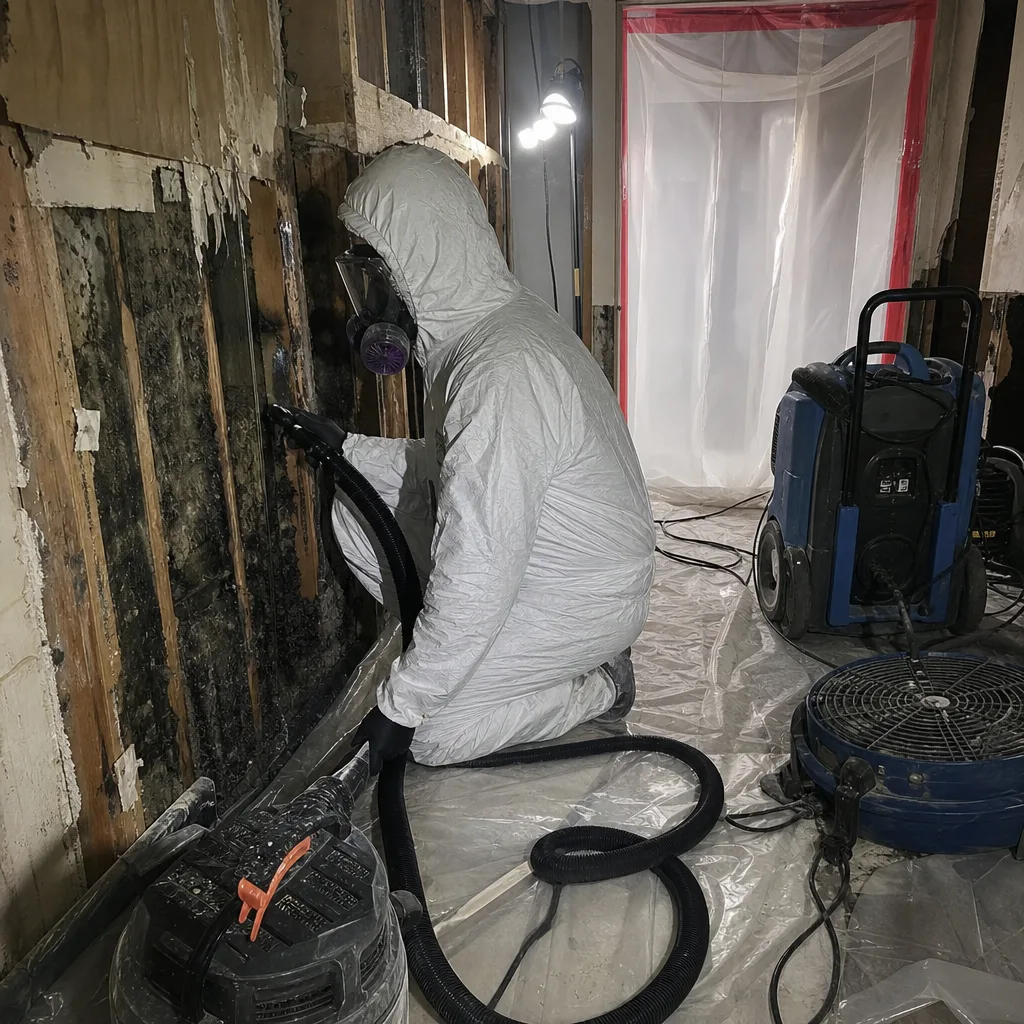
| Air scrubber with HEPA | Portable unit | $40-$65 | Mold or sewage losses |
| Injectidry hardwood floor drying system | Panel or mat system | $85-$150 | 3-7 days for specialty drying |
The appropriate equipment count is determined by the IICRC S500 standard, which specifies one air mover for every 50-70 square feet of affected area and one dehumidifier per 1,000-1,500 square feet of affected space, adjusted for climate conditions. In Playa del Rey, where the marine layer keeps ambient humidity elevated, we often add 20% to dehumidifier capacity to achieve the vapor pressure differential needed for effective drying. That adjustment should be explained in the drying log, not simply billed as extra equipment days.
A common padding tactic is leaving equipment in place after dry standard is reached. The daily moisture log, which we provide as standard documentation, should show progressive moisture content reduction with target attainment clearly noted. Equipment should be removed within 24 hours of dry standard achievement. Any invoice showing equipment days beyond the final drying log entry should be questioned.
Labor: Monitoring and Adjustments
Technician labor for monitoring visits runs $85-$150 per hour in the Los Angeles market, with most visits requiring 1-2 hours. Standard practice is daily visits for the first 2-3 days, then every other day until dry standard. A typical 5-day drying cycle generates 3-4 monitoring visits. Invoices showing daily visits for 7+ days on a straightforward loss, or charges for “equipment checks” that are not documented with moisture readings, are suspect.
Contents Handling: The Hidden Invoice Trap
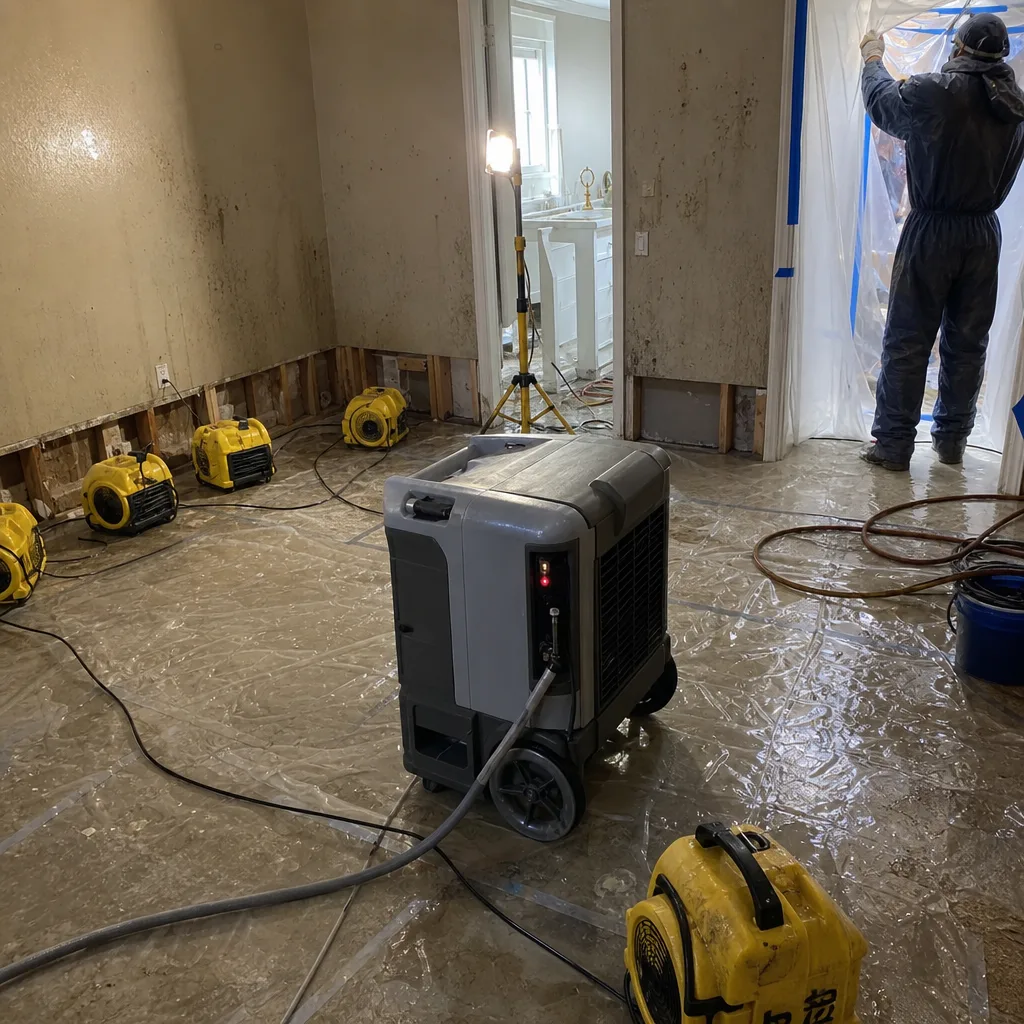
Contents handling is the category most often buried, bundled, or obscured. It is also where homeowners lose the most transparency, because personal property has emotional weight that discourages hard questioning.
A legitimate contents handling scope includes:
- Pack-out: Inventory, photograph, pack, and transport affected items to a cleaning facility or storage. Priced per hour for labor ($65-$110 per hour for 2-3 person crews) plus materials and transport.
- Cleaning: Ultrasonic cleaning for hard goods, dry cleaning for textiles, specialized cleaning for electronics and artwork. Priced per item or per pound.
- Storage: Monthly warehousing, typically $150-$400 per month for a standard household’s contents, depending on volume and climate control requirements.
- Pack-back: Return, unpack, and place items in restored rooms. Priced similarly to pack-out.
The trap: many contractors fold contents handling into “mitigation labor” or “general conditions,” making it impossible to determine whether you are paying $65 per hour for contents technicians or $150 per hour for reconstruction carpenters to move your furniture. Before signing any authorization, request that contents handling be broken out as a separate line item with its own hourly rate and hour estimate.
In Playa del Rey, where many homes contain artwork, musical instruments, or coastal-collected items with sentimental rather than replacement value, the contents inventory photo record is especially critical. Our documented photo record on every visit includes contents condition at pack-out, which becomes the baseline for any later dispute about damage causation.
Rebuild and Reconstruction Costs
Reconstruction is not emergency work. It is scheduled, scoped, and priced in writing before demolition of the temporary repairs begins. Treating it as a continuation of mitigation, with verbal estimates and open-ended authorizations, is how homeowners encounter scope creep.
Current per-square-foot reconstruction costs in the Playa del Rey and West Los Angeles market:
| Component | Economy Finish | Mid-Grade Finish | Premium Finish |
|---|---|---|---|
| Drywall (install, tape, texture, prime) | $3.50-$5.50 | $5.00-$8.00 | $7.50-$12.00 |
| Interior painting | $2.00-$3.50 | $3.00-$5.00 | $4.50-$8.00 |
| Flooring, LVP/laminate | $4.00-$7.00 | $6.50-$10.00 | $9.00-$15.00 |
| Flooring, engineered hardwood | $7.00-$10.00 | $9.50-$14.00 | $13.00-$22.00 |
| Flooring, tile (porcelain or ceramic) | $8.00-$12.00 | $11.00-$16.00 | $15.00-$25.00 |
| Baseboard and trim | $2.50-$4.00 | $3.50-$6.00 | $5.50-$10.00 |
| Electrical (per fixture/outlet) | $150-$250 | $200-$350 | $300-$500 |
| Plumbing (per fixture) | $200-$400 | $350-$600 | $500-$900 |
These are material and labor costs only. Project management, permits, and final inspections are additional. In Playa del Rey, where the Los Angeles Department of Building and Safety requires permits for electrical and plumbing work beyond simple fixture replacement, permit costs run $200-$800 depending on scope and typically add 2-4 weeks to scheduling.
The Haven Standard requires that reconstruction pricing be presented as a fixed written price before work begins, with change orders documented and signed for any deviation. This is not merely customer protection; it is claim documentation. Insurance adjusters pay fixed scopes more readily than open-ended invoices, and the written price before work starts creates the paper trail that supports supplemental claims if hidden damage is discovered.
How to Read Xactimate Line Items and Spot Padding
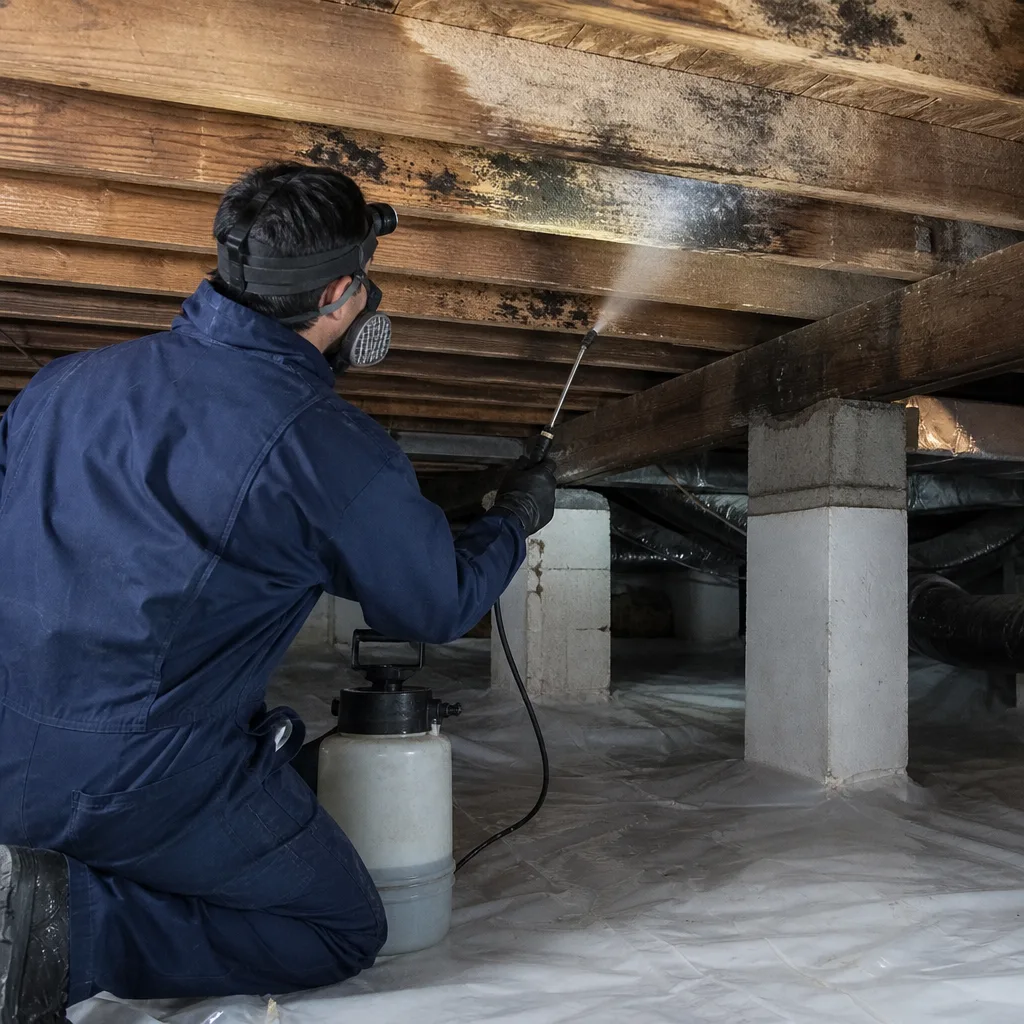
Most restoration contractors in the California market use Xactimate, the estimating software developed by Verisk and adopted by most major insurers. Understanding how Xactimate structures pricing is essential to evaluating any invoice.
Xactimate prices are built from three components: unit cost (the base price for a specific task in a specific geographic market), component depreciation (if actual cash value rather than replacement cost is being applied), and overhead and profit (typically 10% each for contractor overhead and contractor profit, applied to certain line items). The Los Angeles market, which includes Playa del Rey, uses Pricing Data ID 42R for residential repairs.
Key terms to recognize:
- S/F: Square foot. Used for flooring, drywall, painting, and other area-based work.
- S/Y: Square yard. Used for carpet and some flooring; 1 square yard equals 9 square feet. A common error is billing carpet removal in square feet when Xactimate prices it in square yards, inflating the quantity by 9x.
- L/F: Linear foot. Used for baseboard, trim, and some specialty items.
- EACH: Per-item pricing for fixtures, appliances, and discrete components.
- HOURS: Labor time, often with a preset labor rate for the market.
To cross-check a contractor’s line items against published costs:
- Request the Xactimate estimate in PDF format with line-item detail, not just a summary.
- Verify that the Pricing Data ID matches your market (42R for Los Angeles residential).
- Check unit of measure on every line: S/F vs. S/Y is the most common unit-switch padding tactic.
- Compare the unit cost shown to the Xactimate online unit cost reference for your market, which is publicly available with free registration.
- Question any line item with a unit cost more than 15% above the published reference, or any line item with no unit cost shown at all.
One specific Playa del Rey consideration: Xactimate’s default pricing for coastal markets does not always account for the additional corrosion protection required for fasteners and hardware in salt-air environments. Legitimate upcharges for stainless steel or coated fasteners should be itemized specifically, not applied as blanket percentage increases.
What Insurance Covers vs. What You Pay
The scope of work document controls every dollar. Not the adjuster’s initial estimate, not the contractor’s first walkthrough, but the signed, line-item scope that defines what will be done, how it will be done, and what it will cost.
Standard homeowner policies in California typically cover:
- Sudden and accidental water damage from plumbing failures, appliance leaks, or storm intrusion
- Fire and smoke damage, including secondary damage from suppression efforts
- Wind and hail damage to the building envelope
- Reasonable costs to mitigate further damage (emergency services, temporary repairs)
- Contents cleaning and storage, up to policy sublimits
- Additional living expenses if the home is uninhabitable during restoration
What standard policies typically do not cover:
- Flood damage from rising water, storm surge, or tidal action (requires separate flood insurance through NFIP)
- Slow leaks over 14+ days, which insurers classify as maintenance issues
- Sewage backup without specific endorsement (common in older Playa del Rey homes with combined sewer connections)
- Mold remediation beyond the limits of sudden water damage coverage, unless specific mold endorsement exists
- Deductible amount, which the homeowner pays on every claim
California deductibles for water damage typically run $1,000-$2,500 for standard policies, with percentage-based deductibles (1-2% of dwelling coverage) common in higher-value coastal homes. On a $1.2 million dwelling, a 1% deductible is $12,000 out of pocket before insurance pays.
The critical documentation for insurance coverage is the moisture log and photo record that establishes when the loss began and whether it was sudden. In Playa del Rey, where slab foundations can conceal slow leaks for weeks, the ability to document sudden versus gradual damage can determine whether a $40,000 claim is covered or denied. Our daily drying logs, photographed moisture readings, and written scopes are designed specifically to answer this question with evidence rather than assertion.
Direct insurance billing is available, and we coordinate with adjusters using the same documentation package we provide to homeowners. Photo-documented assessments, written scopes, and daily moisture logs turn restoration invoices into payable claims because they answer the adjuster’s questions before they are asked.
Three Line Items to Demand Separately Before Signing
These three categories are routinely buried in broader line items to prevent cost comparison and to allow markup that would be visible if itemized:
1. Contents Manipulation
This is the labor to move furniture, remove electronics, and protect belongings before demolition or drying begins. When buried in “mitigation labor,” it is billed at technician rates ($85-$150/hour) rather than general labor rates ($45-$75/hour). Request it as a separate line item with its own hour estimate and hourly rate. A typical Playa del Rey living room requires 2-4 hours of contents manipulation; a fully furnished home may require 8-12 hours.
2. Antimicrobial Application
Antimicrobials (disinfectants and biocides applied to prevent mold growth) range from $0.25-$0.75 per square foot for standard application to $1.00-$2.50 per square foot for specialized treatments. When included in “general cleaning” or “sanitization,” the quantity applied and the specific product used are invisible. Request the product name, EPA registration number, application rate, and square footage treated as separate line items. This is especially important in Playa del Rey, where the combination of water intrusion and coastal humidity creates mold-conducive conditions within 24-48 hours.
3. Final Clearance Testing
Air quality and surface sampling to confirm mold remediation completion or drying success typically costs $300-$800 for a standard residential test by an independent third-party laboratory. When performed by the restoration contractor rather than an independent, or when billed as “verification” without specifying the testing method, the result may lack the credibility needed for insurance documentation or real estate disclosure. Request that clearance testing be itemized separately, with the laboratory name, testing standard (such as AIHA-LAP or EMSL methodology), and turnaround time specified.
Each of these line items, when buried, can add $1,500-$5,000 to an invoice without the homeowner being able to determine whether the pricing is reasonable. Haven Standard, Clause 1 requires written pricing before work begins precisely to prevent this obscurity.
Common Mistakes to Avoid
- Signing an authorization without a written price ceiling. The “not to exceed” figure should be in dollars, not percentages, and should define exactly what triggers a re-estimate.
- Accepting equipment counts without understanding the calculation. Ask how many air movers and dehumidifiers are being deployed, what standard was used to determine the count, and how the count will be adjusted if drying progresses faster or slower than expected.
- Ignoring the marine layer’s effect on drying time. Playa del Rey’s coastal humidity can extend drying cycles by 20-40% compared to inland Los Angeles. This is legitimate if documented; it is padding if simply billed as extra days without psychrometric justification.
- Paying for “administrative fees” above 15%. Project management and administrative overhead are legitimate costs, but they should be calculated on direct costs (labor, materials, equipment) and should not exceed 15% for standard residential work.
- Failing to photograph pre-loss condition. The photo record we provide documents condition at arrival; homeowners should also document condition before any work begins, especially for contents and finish materials that will be removed.
- Not requesting the Xactimate estimate with line-item detail. Summary estimates hide unit costs, quantities, and units of measure that are essential to verification.
- Confusing mitigation with reconstruction authorization. These are separate contracts with separate pricing structures. Signing a single authorization for both invites scope creep and billing confusion.
When to Call a Professional
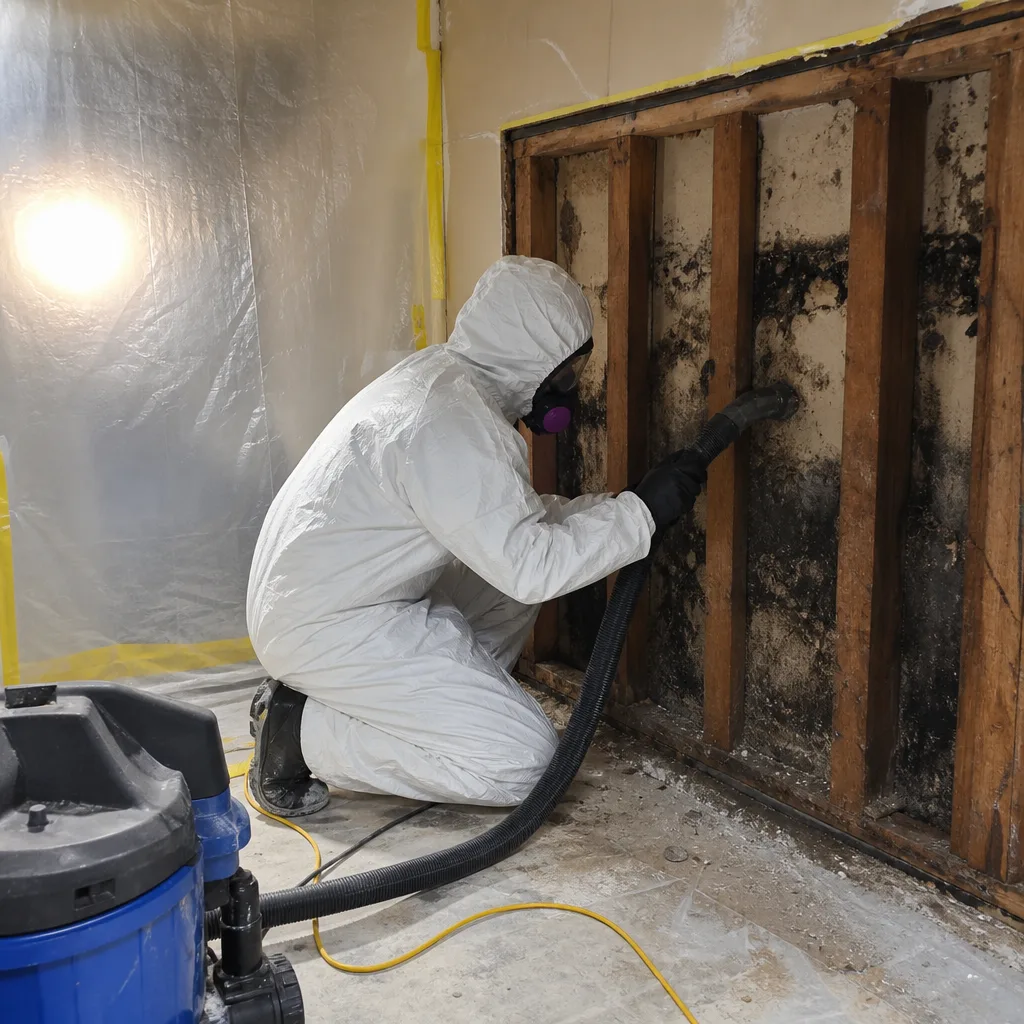
Call for professional assessment when water has affected more than a single small room, when Category 2 or 3 water is involved (gray water from appliances or black water from sewage or flooding), when mold is visible or suspected, when fire or smoke damage has occurred, or when structural materials such as subfloors, wall cavities, or ceiling assemblies are involved. See our DIY vs Professional Damage Restoration: The Playa del Rey Homeowner’s Decision Guide to help evaluate your situation. In Playa del Rey, where the 1950s-1970s housing stock often contains original plaster and lath, even small water losses can require specialized drying to prevent irreversible damage.
DryMark Restoration Playa del Rey offers free estimates in Playa del Rey and the surrounding South Bay communities. Visit our more guides & resources page for additional homeowner education. Every estimate includes a written scope, a documented photo record, and a fixed price before work begins, per Haven Standard, Clause 1. For water damage, mold, fire, or reconstruction assessment, call (424) 351-9295. A live person answers every call, 24 hours a day, 7 days a week, with no voicemail on emergency lines.
Frequently Asked Questions
Standard residential water damage mitigation in Playa del Rey ranges from $3,500 to $8,500 for drying and demolition, with reconstruction adding $12,000 to $45,000 depending on finish materials and affected area. Emergency service calls run $250-$500 during business hours and $400-$750 after hours. Call (424) 351-9295 for a written estimate specific to your loss - estimates are free and include line-item pricing before any work begins.
Administrative and project management fees are not tied to visible labor or materials, so they lack the natural check that a homeowner can apply by counting equipment or measuring square footage. Legitimate contractors price this at 10-15% of direct costs; inflated invoices often show 25-35% with no breakdown of what the fee covers. Always request that administrative costs be calculated as a percentage of specified direct costs, not as a flat fee or percentage of a subtotal that already includes markup.
Insurance covers sudden and accidental damage minus your deductible, typically $1,000-$2,500 or 1-2% of dwelling coverage for higher-value homes. Coverage does not extend to maintenance-related issues, gradual leaks, or flood damage without specific endorsement. The scope of work document signed before work begins controls what is billed to insurance versus what falls to your deductible. Photo-documented assessments and written scopes, which we provide as standard, are the documentation that supports full coverage.
Legitimate equipment charges are tied to daily moisture logs showing progressive drying and removal within 24 hours of dry standard attainment. Request the drying log with equipment placement and removal dates, then cross-check against the invoice. Daily rates should fall within the ranges shown in this guide; rates significantly above these, or equipment days extending beyond documented need, should be questioned before payment.
Xactimate is the industry-standard estimating software used by most restoration contractors and insurance adjusters in the United States. It provides unit costs specific to geographic markets, including the Los Angeles coastal area. Understanding Xactimate units of measure (S/F for square foot, S/Y for square yard, L/F for linear foot) allows you to verify quantities and spot unit-switch errors that inflate invoices. Request the Xactimate estimate in line-item detail, not summary format.
The marine layer and elevated ambient humidity in Playa del Rey slow natural evaporation, often requiring 20% additional dehumidifier capacity and extending drying cycles by a day or more compared to inland locations. Salt air also accelerates corrosion of fasteners and hardware, sometimes requiring upgraded materials for reconstruction. These factors are legitimate cost drivers when documented with psychrometric data; they are padding when applied as blanket percentage increases without explanation.
You should receive four documents as standard deliverables: a written scope of work with fixed pricing signed before work begins, a daily moisture log with readings and equipment status, a photo record of conditions at each visit, and a final completion certificate with any warranty terms. The Haven Standard requires these documents on every job; their absence is a red flag for both quality and insurance documentation.
The Bottom Line
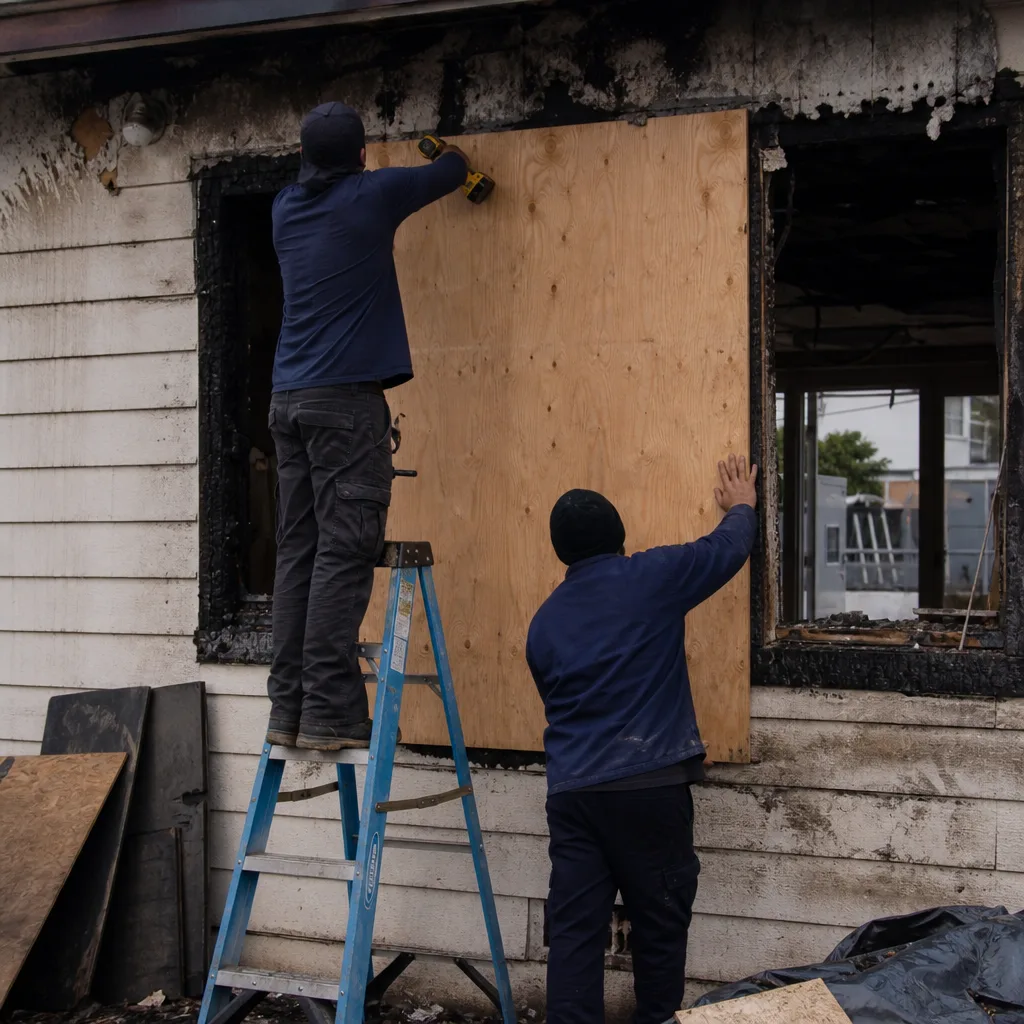
Restoration invoices reward the homeowner who reads them carefully. The four-phase structure, the Xactimate pricing logic, and the specific line items most vulnerable to padding are all knowable and all verifiable. In Playa del Rey, where coastal conditions create legitimate complexity, the distinction between justified cost and inflated billing comes down to documentation: the moisture log that proves equipment days, the written scope that fixes the price, the photo record that establishes condition. These are not customer service extras. They are the evidence that turns a restoration invoice into a claim that gets paid. Demand them, verify them, and keep them.
Written by Alicia Brennan, Owner at DryMark Restoration Playa del Rey, serving Playa del Rey since 2011.